Careful cleaning can make a used screen easier to assess, but unsuitable chemicals or pressure can create new damage. Start with a visual inspection and the care instructions for the exact display.
Identify the surface and its condition
Switch off and disconnect accessories as instructed. Establish whether the visible surface is a protective film, glass or a specialised coating. Do not automatically mistake a dirty protector for a damaged display. Photograph existing cracks or unusual marks before treatment. Rubbing harder is not a useful diagnostic method for lifting layers or damaged glass. Special textured surfaces may require particular cloths or procedures. Use their specific manufacturer guidance instead of a general recommendation for all screens. A bottle labelled screen cleaner does not, by itself, confirm suitability for every coating or every kind of display surface.
Start with minimal intervention
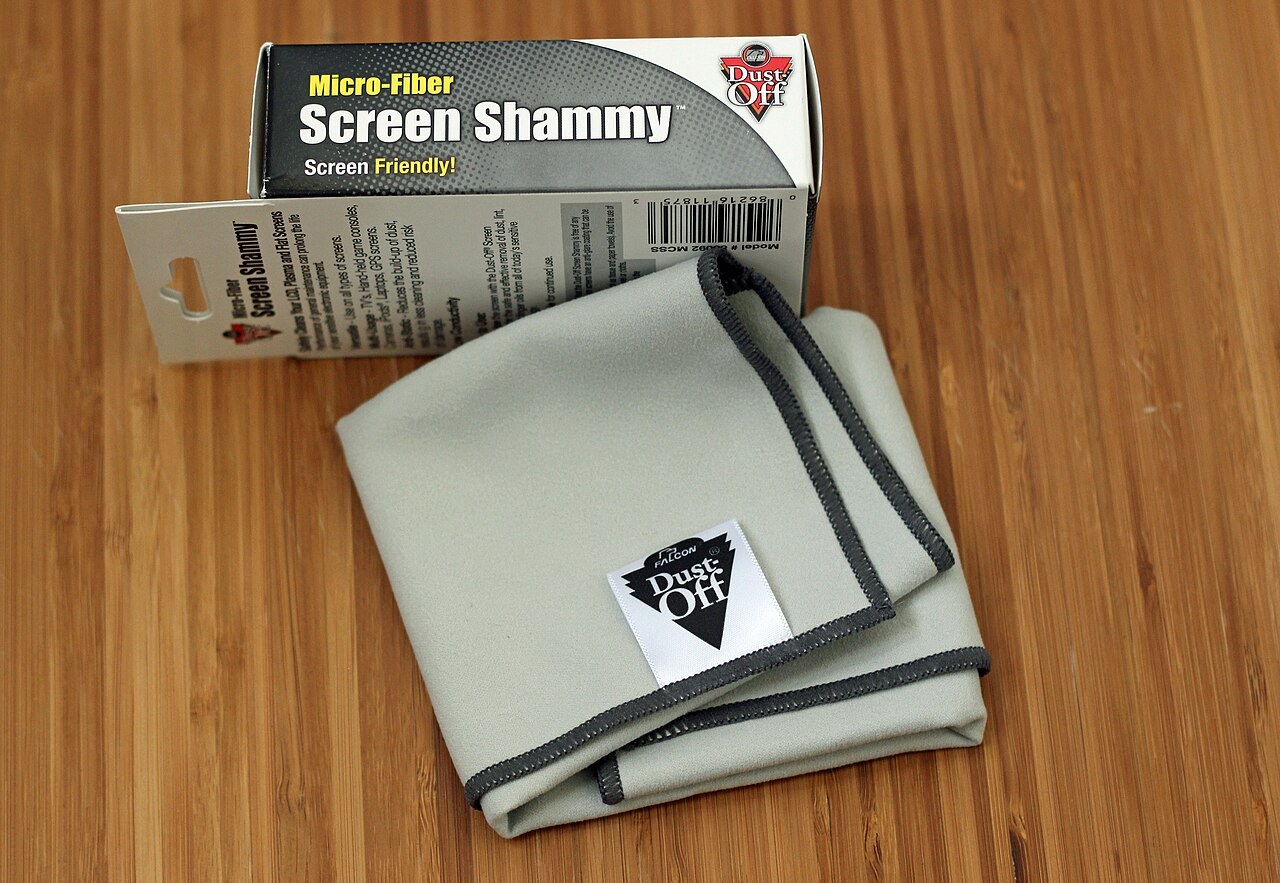
Use a clean, soft, lint-free cloth without unnecessary pressure. Make sure the cloth does not contain hard particles. If the instructions permit moisture, lightly dampen the cloth instead of spraying liquid onto the screen. Keep moisture away from edges, openings and connections. Do not transfer approval for a cleaning chemical from another product without checking. Household cleaners, abrasives and rough kitchen paper are not universal screen-care materials. If a residue remains, pause and establish the appropriate method. Additional pressure or several different chemicals used one after another cannot turn an unsuitable technique into an appropriate one.
Assess the result in ordinary conditions
Allow the surface to dry as instructed before switching on again. Examine it under different lighting and then check the image during normal use. Cloth smears, reflections and display faults are separate observations. Describe whether a mark remains visible while switched off and whether it changes with the viewing angle. These details help a later enquiry but do not establish a particular cause. Do not repeat cleaning indefinitely if the surface stays unchanged. Stronger polishing cannot turn a scratch into an ordinary dirt problem. Keep the suitable cloth clean and separate from dusty tools so the next cleaning attempt does not introduce particles.
Common questions
Can I use window cleaner?
Only if the manufacturer explicitly permits it for that surface. General suitability for glass is not enough when the display coating is unknown.
Why inspect it while switched off first?
This helps record surface marks without confusing them with displayed content. It does not, however, provide a complete technical diagnosis of the screen.