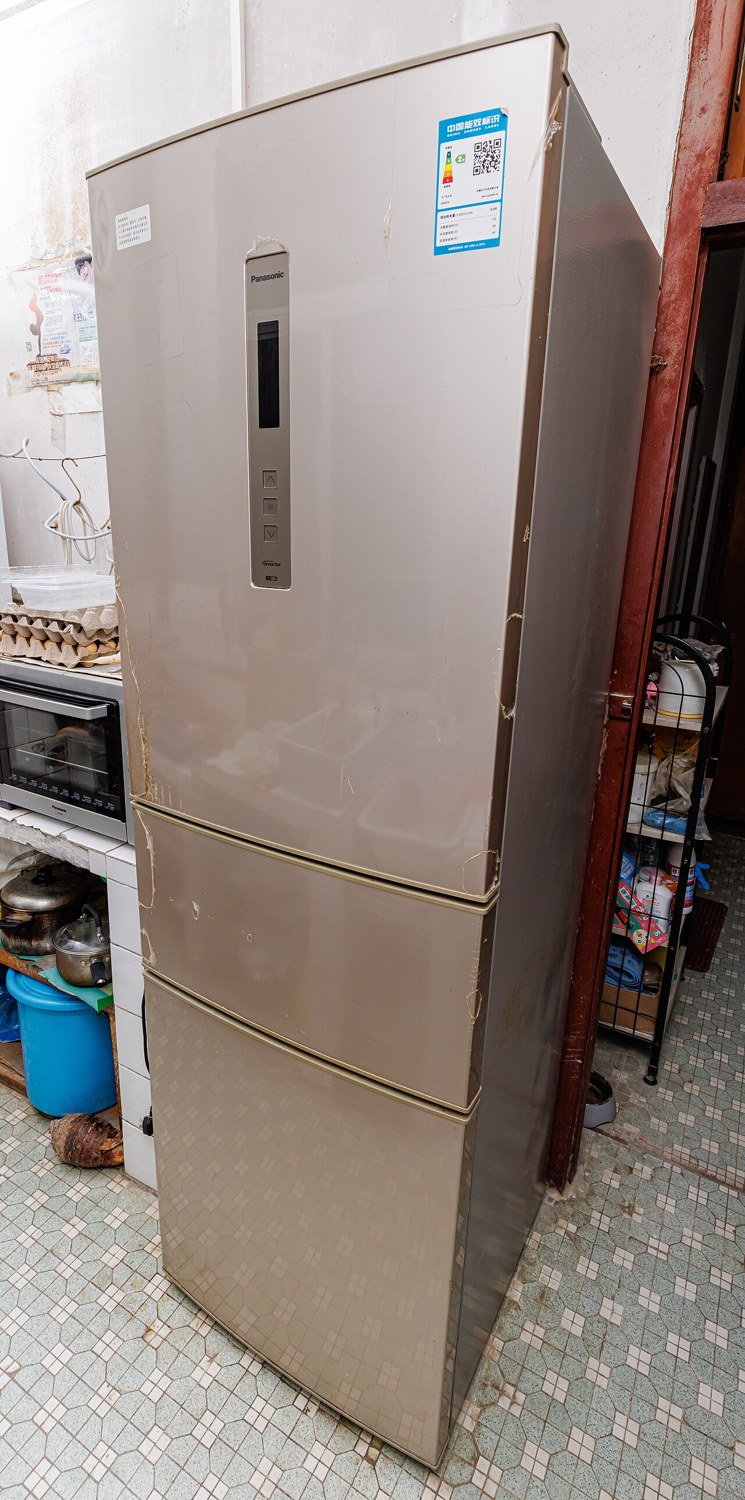
A refrigerator may be discounted because of an obvious dent. Whether you can live with its appearance is only one part of the decision. Establish which areas are affected and what operation has actually been observed. Ask for photographs of the whole appliance, the damaged spot from several angles and the open interior.
Examine the door and cabinet separately
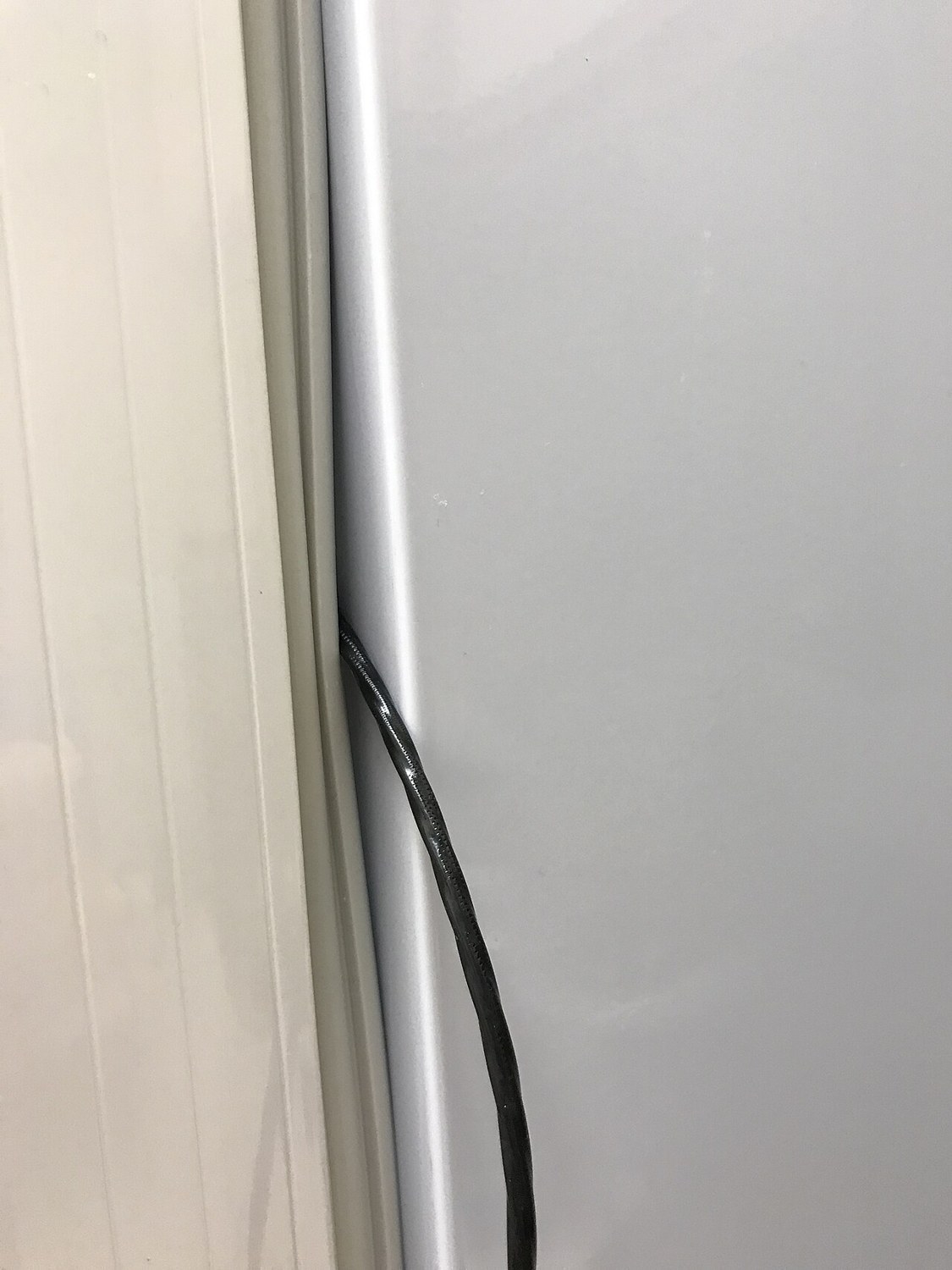
A depression in the middle of an exterior panel is different from a distorted door edge. At a viewing, examine the meeting line between door and cabinet. Does the door close evenly without being lifted or pushed hard against the body? Are the hinge and handle secure, and does the door catch neighbouring parts as it opens?
Look at the interior lining and shelf supports too. A seemingly small impact is a reason to inspect carefully, rather than a basis for remote diagnosis. Do not drill, bend or hammer the damaged area back into shape. That goes beyond a visual condition check.
An interior light does not demonstrate cooling
A working lamp does not establish that the refrigerator cools adequately. Ask how long it was demonstrated, which setting was selected and whether temperatures were observed. A warm appliance immediately after switching on tells you little. A sales photograph of a display reading has similar limitations.
For your own observation, the appliance needs proper installation and the time required by its instructions. Record the room conditions, setting and measurement position. This can reveal unusual behaviour but cannot replace a technical examination or guarantee future performance. Do not put sensitive food into an appliance whose cooling remains uncertain.
Include transport and installation space
Find out how the refrigerator has been transported and how it will reach you. Bosch’s moving guidance favours keeping the appliance upright and refers readers to model instructions. A universal waiting period borrowed from another appliance type is no substitute for the relevant advice.
Measure the door’s opening sweep and required ventilation spaces as well as the footprint. Include missing drawers, shelves and spacers in your cost calculation. A cosmetically acceptable refrigerator may still be unsuitable if its door cannot open far enough in the intended position.
Common questions
Can I simply pull the dent out?
Do not assume so. The construction and what lies behind the damaged surface are uncertain. Ask the manufacturer or a qualified service provider whether cosmetic work is appropriate.
Is “it cools” enough information?
Ask about the conditions behind that observation. Location, running time and an understandable temperature record make the statement more useful than a single word.