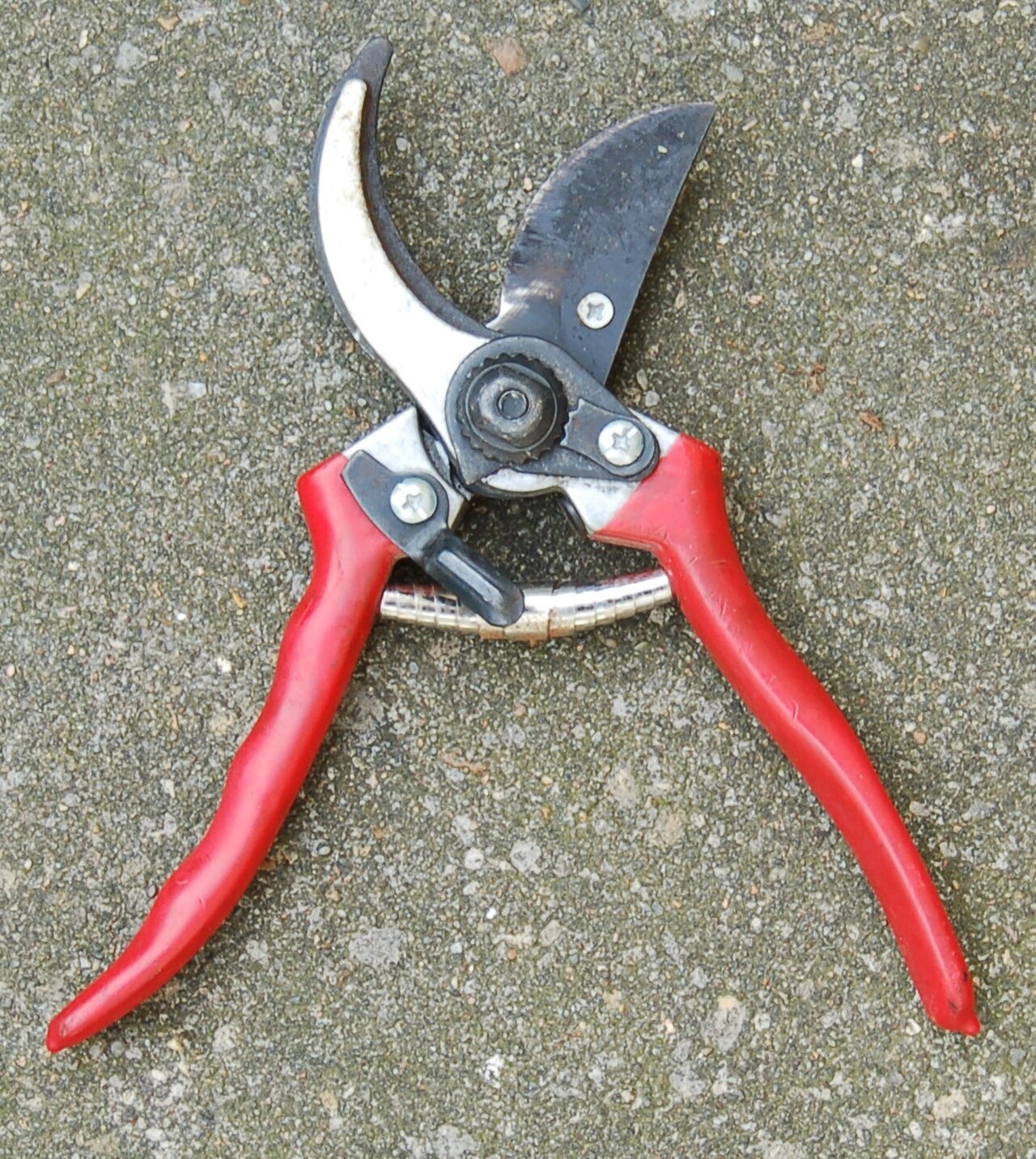
Used pruning shears may have been cared for well or substantially altered. Ask for the model and known replacement parts. The intended cutting mechanism determines how blade and counterpart should meet. Bypass and anvil designs cannot therefore be judged using identical expectations of visible blade contact. Understand the tool before interpreting its wear or trying a cut.
Inspect blades without touching the edge
Examine the edge, tip and mounting in good light. Describe chips, bent areas and conspicuously uneven reworking. Do not test sharpness with a finger. A shiny edge may have been recently ground while retaining unsuitable geometry. Ask whether and how sharpening was performed.
FELCO provides model-specific maintenance guidance and replacement identification. A matching blade may be a useful replacement; an arbitrary different part changes the combination. Compare attachment and shape using the exact model. Excessive grinding should not be assumed to be ordinary care.
Inspect pivot, spring and closure
Open and close the tool through its intended travel while keeping clear of edges. Watch for catching, visibly loose parts and unusual sideways movement. Sap or dirt may contribute, but the actual cause still needs explanation. Simply tightening the pivot progressively can also change operation.
Check any spring, stop and lock for completeness. Telescopic tools also need their length locks and grips assessed. A missing restraint is more than a transport inconvenience. Carry closed shears only with a reliable closure and no exposed blade accessible to others.
An ordinary cut is enough
After an unremarkable exterior inspection, a normal cut in suitable plant material can demonstrate handling. Respect the intended application and appropriate protection. A hard oversized branch outside the tool specification is not a useful stress test. Wire belongs only in explicitly intended features and is not universal trial material.
Assess handle span and controlled operation. Sound shears may still be too large for your hand. Include cleaning, matching wear parts and possible competent servicing. One successful cut demonstrates a particular function without establishing performance on every plant or remaining life of all components.
Common questions
Can every pair of shears be sharpened freely?
No. Angle, blade shape and design determine the method. Follow model guidance or have an uncertain blade serviced professionally.
Is a missing spring easy to replace?
Possibly, if the correct part is available and the rest is undamaged. Confirm assignment and fitting before basing the purchase on that assumption.