A used lamp may appeal because of its design while its history remains uncertain. Before switching on, examine the cable, socket, housing and markings. Missing model information or altered electrical components need explanation. Decorative patina differs from brittle wiring or damaged insulation. Start with that distinction rather than treating every sign of age as harmless character.
Start cool and disconnected
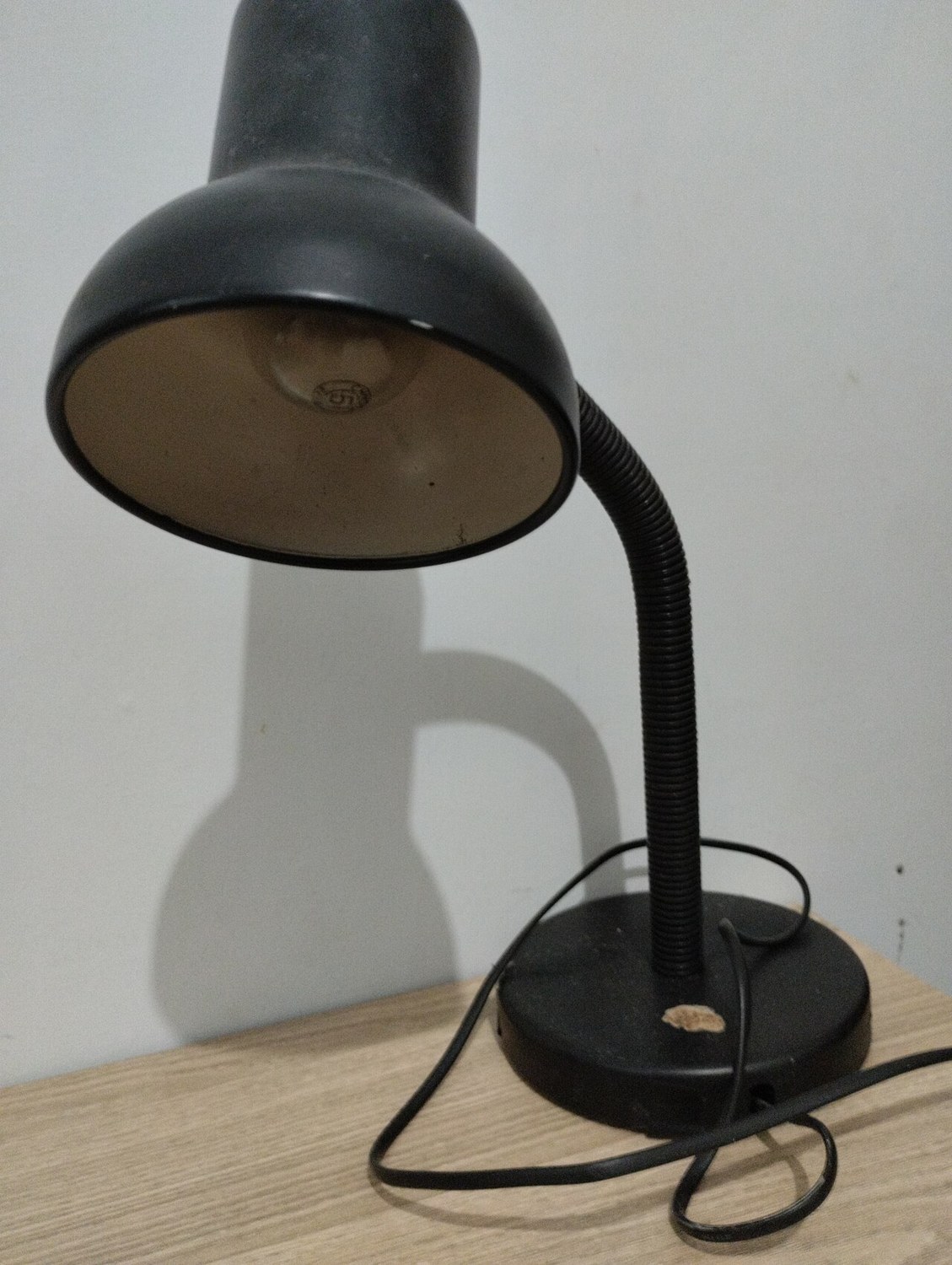
With the plug removed and lamp cool, inspect accessible exterior areas. Look for crushed cables, repair tape, broken socket components and burn marks. Do not put fingers into the socket or open electrical covers. Visible damage is a reason to skip a powered trial.
Electrical Safety First highlights damaged cables, suitable bulbs and safe positioning for lamps. These matter to buying too. An exterior check cannot exclude concealed electrical faults, however. Uncertain history or modifications justify qualified assessment.
Match bulb and intended environment
Read the socket, bulb-type and power-limit information. An identical cap does not establish suitability in heat, size or dimming. For integrated LEDs, ask about replaceable components and servicing. Depending on construction, failed lighting may require more than a simple bulb change.
Power supplies need readable markings and the correct assignment. A physically matching low-voltage plug does not establish the right voltage or polarity. Indoor lamps are not automatically suitable for damp rooms or outdoor use either. The permitted application should be understandable for this version.
Inspect mechanical use separately
Check the base, joints and shade fixing without overloading them. A desk lamp should remain stable in its intended positions. Adjustment should not trap the cable. A heavy shade on a different support changes the combination and should not be treated as standard original equipment.
Only after suitability is resolved, arrange an ordinary demonstration with the correct bulb. Record unusual odour, flicker or noise and obtain qualified advice. Wiring fixed installations belongs to qualified people. Include inspection, required parts and safe transport in the price, particularly for glass or large shades.
Common questions
Is a CE marking an inspection report?
No. It replaces neither a condition assessment nor investigation of modifications. The particular appliance and understandable documentation matter.
Can I simply wrap a damaged cable?
Repair tape does not establish a safe cable. Keep the lamp disconnected and have the damage assessed professionally.