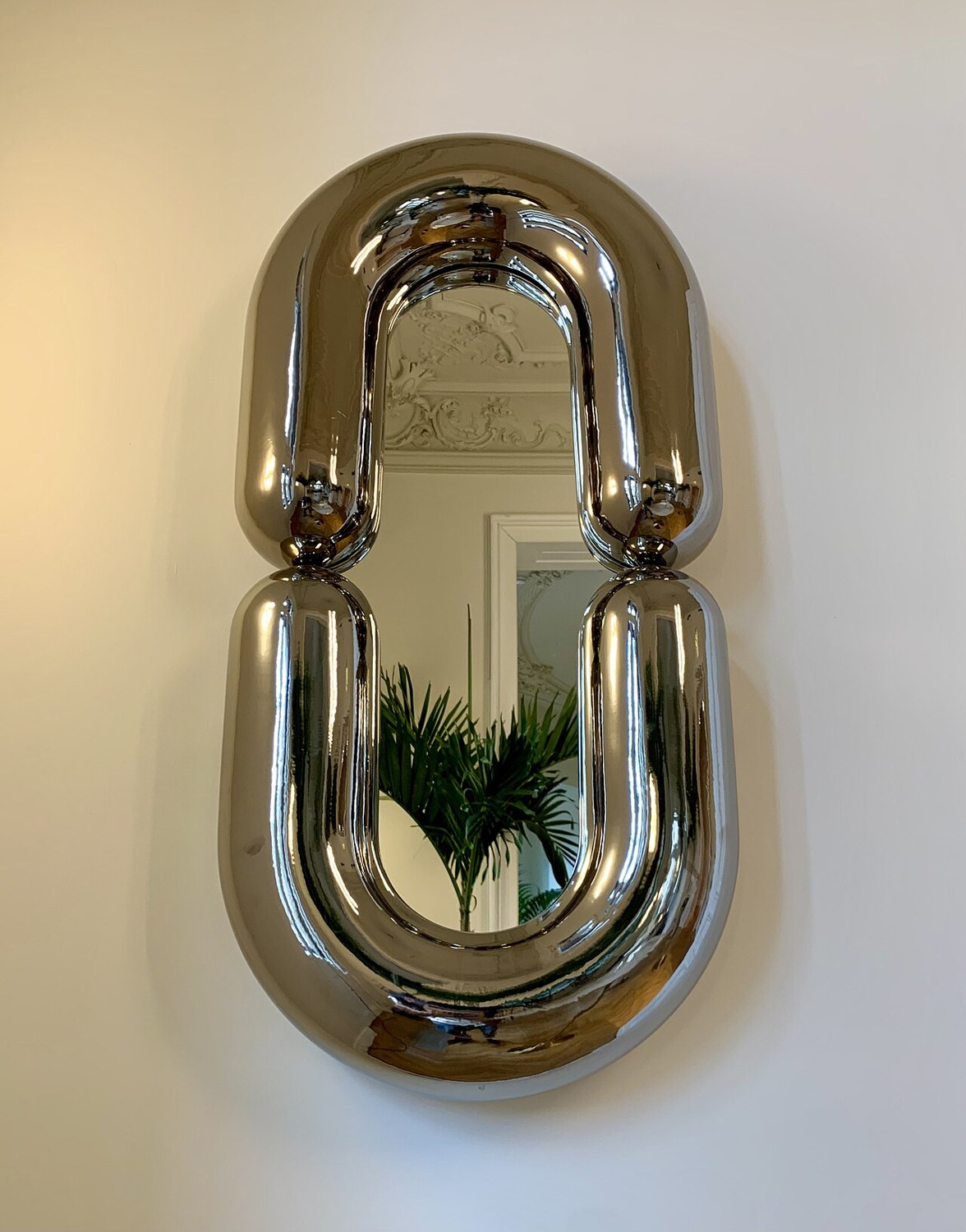
A used mirror can look flawless from the front while having incomplete or unsuitable mounting parts. Before buying, request photographs of the back, product label and brackets as well. For large mirrors, prepare the viewing so that the glass does not have to be lifted awkwardly or leaned unsecured simply to see its condition.
Inspect glass and edges without risky handling
Examine visible edges, corners and the surface in good light. Record chips, cracks and damaged frame sections separately. Do not run a bare hand along a suspect edge. A small chip can be sharp even if a frame would later conceal it.
View marks and dark edge areas from several angles. They may involve the front surface or reflective backing; a blurred photograph cannot distinguish them reliably. Do not scrape the rear experimentally. Ask about moisture exposure and previous cleaning where changes are visible.
Identify every mounting component
The intended system must support the weight. Check rails, brackets and required matching parts against the installation documents. The seller’s existing wall plugs may be unsuitable for your substrate. A missing small plastic fitting can still be an important component.
Manufacturer and exact product identifiers also help with recall checks. IKEA has published a repair recall involving wall fittings on certain LETTAN mirrors, for example. This illustrates why an intact reflective surface and safe mounting are separate questions. Check the information for your particular product and market.
Prepare transport and installation
Plan protection for face and edges and a suitably restrained transport position following manufacturer guidance. A soft blanket alone does not reliably protect a large sheet of glass against every load. Use an appropriate moving or installation service if size and weight exceed safe handling arrangements.
At the destination, use only the intended attachment points. Adhesive or one remaining screw is not a universal substitute for a complete hanging system. Include correct fittings and installation in the cost. An unclear backing or damaged brackets need resolution regardless of the attractive price.
Common questions
Can I simply stand a wall mirror on the floor?
Only if its design and intended restraint permit that use. Leaning it against something does not establish safe installation.
Does a small chip need repair?
The location and nature of damage need assessment. Sharp edges and possible cracks should receive qualified attention rather than merely being covered cosmetically.