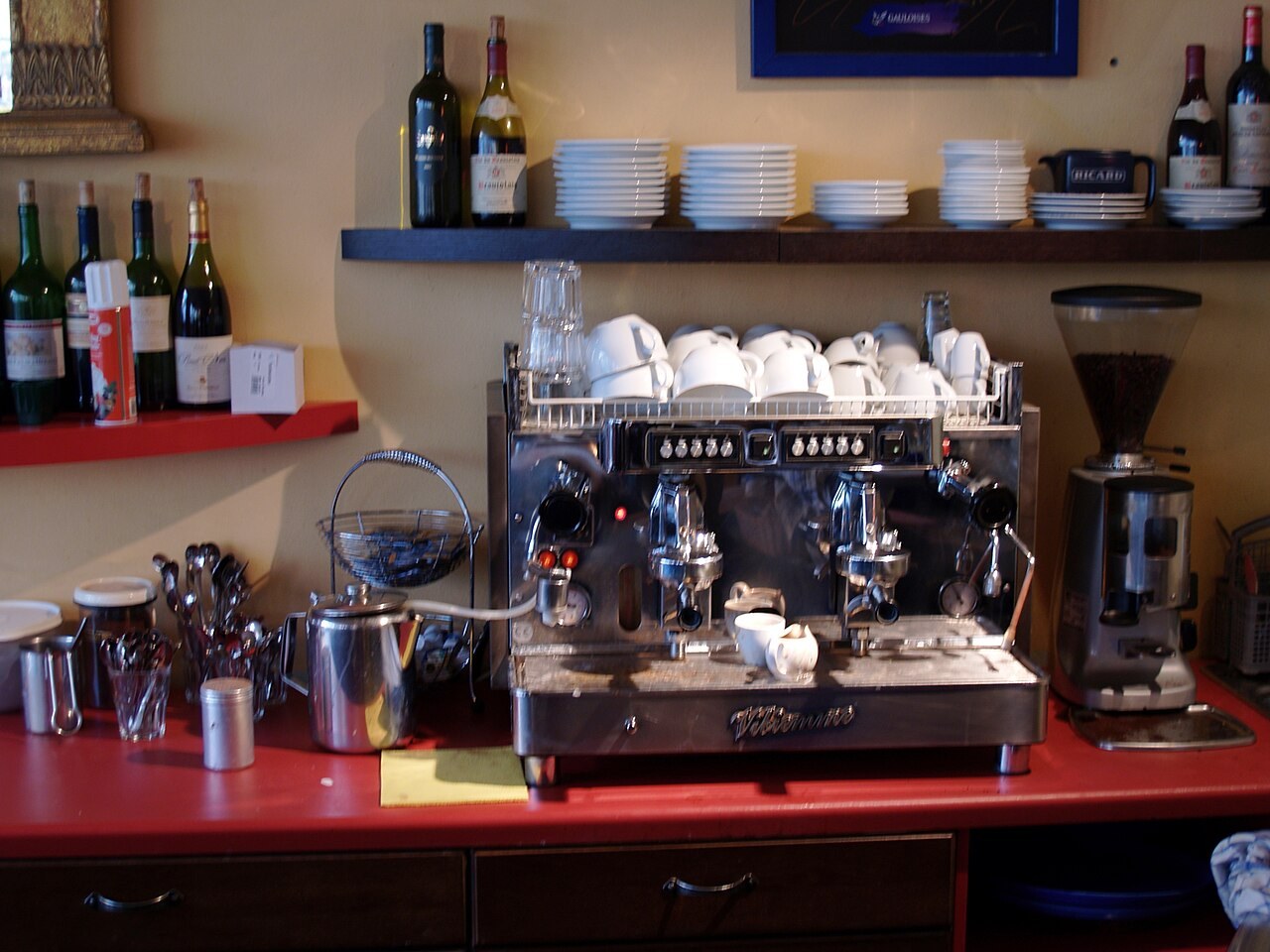
Used espresso machines are often offered with numerous extras. Separate necessary parts from optional barista accessories. The portafilter and baskets must suit the model, and the machine’s condition needs an understandable explanation. An attractive tamper does not make up for a cracked water tank or unexplained water escaping from the appliance.
Check fit without force
Have the intended portafilter fitting demonstrated with the machine off and cool. It should lock in as directed without forcibly holding the cabinet still. Grounds on contact surfaces or an overfilled basket can affect its position. Breville also identifies alignment and gasket condition as relevant factors.
Inspect the handle and locking lugs for visible cracks and deformation. Ask for the exact part assignment if a third-party portafilter is included. Nominal basket diameter alone establishes neither correct locking nor seal contact. Do not compensate for a leaking connection by tightening progressively harder.
Inspect steam components and care history
The steam wand should be accessible and externally clean. Ask what cleaning followed milk use and what periodic maintenance was performed. A clean nozzle says little about the rest of the water path. Keep hands away from hot components and pressurised connections during a demonstration.
Descaling, cleaning programmes and any backflushing are not identical for every machine. Establish which procedures the manual actually specifies and whether required cleaning inserts or accessories are missing. Cleaning with an arbitrary product does not establish correct maintenance.
Separate behaviour from flavour
Have a water delivery and normal drink-making process demonstrated with suitable preparation. Record where water emerges, whether messages appear and how controls respond. Grind setting, dose and beans influence extraction. A thin espresso therefore does not prove pump failure, and a strong espresso does not demonstrate complete watertightness.
Allow for required accessories, replacement gaskets and possible professional servicing. Inspect the tank, drip tray and their catches too. Stop if water leaks inside the cabinet or electrical warning signs appear. A purchase inspection remains an observed use, not pressure testing or dismantling.
Common questions
Does a handle turning unusually far indicate a fault?
Not automatically. Design, basket, dose and gasket condition interact. Compare the intended fitting procedure and investigate unusual changes.
Must a used machine be backflushed?
Only if its design and instructions require it. Some machines use different cleaning methods; a blind basket is not a universal maintenance tool.