Storage capacity often attracts the first look when buying a used freezer. Check whether that space will actually be usable: a split drawer or a door that cannot open far enough at home affects everyday access. Obtain the complete model identifier before comparing accessories or technical information, because apparently similar appliances can have different fittings.
Move internal fittings gently
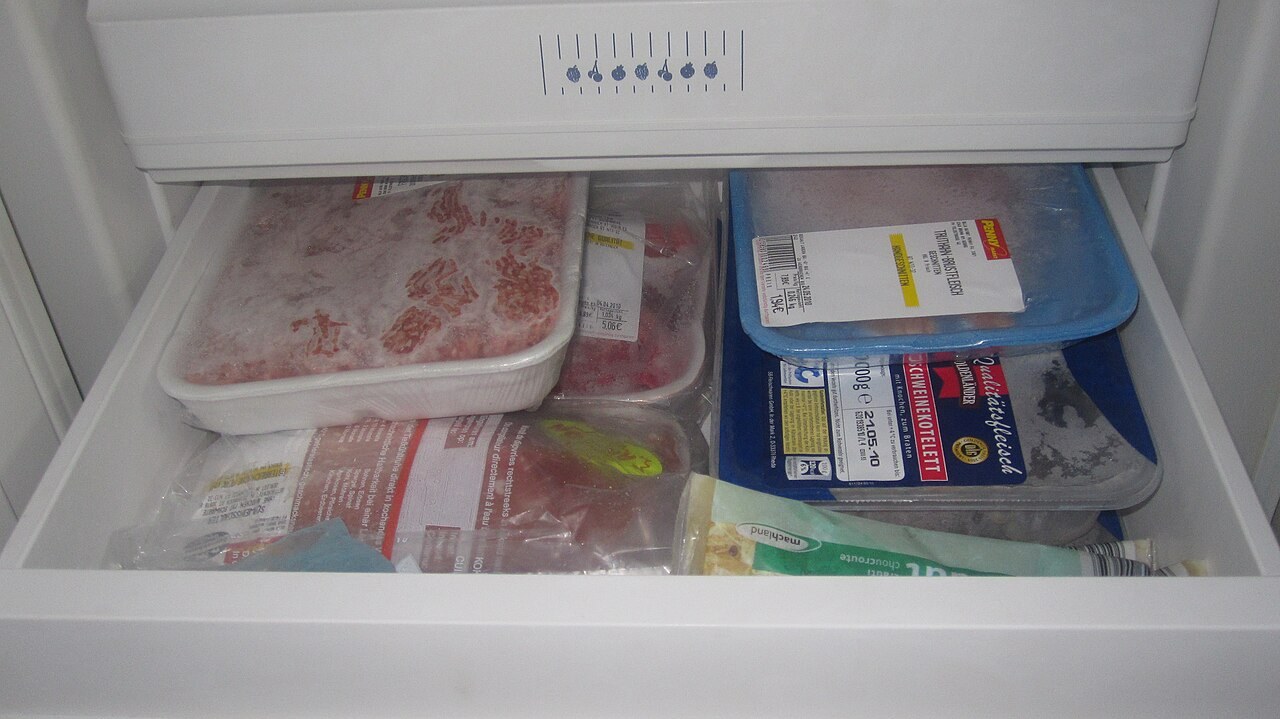
With the door open, carefully pull out accessible drawers. Look for split handle areas, missing runners and chipped edges. Establish whether a drawer has merely left its guide or has material missing. Do not force cold or frozen parts free.
Check that shelves and flaps belong to the appliance. A replacement drawer that looks suitable may have the wrong depth or runners. Compare part numbers through the manufacturer instead. Record damage to the visible inner lining too; do not scrape or drill those areas.
Match the freezer to the proposed room
A freezing shed is not automatically a suitable location for every freezer. Climate class describes the intended ambient temperature range. Bosch directs owners to the rating plate and instructions for this information. Check the specific appliance and actual room conditions rather than assuming outdoor suitability from its product name.
Allow for ventilation, a suitable socket, level support and the route to the installation position. Removing drawers may require more door opening than simply looking inside. Measure clearance to walls and neighbouring furniture. A smaller freezer with full access can be more practical than a large one whose lower compartments remain obstructed.
Put a cooling observation into context
Ask how freezing performance was assessed. A running sound or illuminated display does not establish stable food-storage temperatures. A useful observation records the setting, running time and measurement conditions. Briefly powering an appliance in a warehouse does not provide that evidence.
After correct transport and installation, follow the commissioning instructions for the model. Examine the seal and closing action and watch for unusual temperature behaviour. Heavy unexplained icing or recurring error messages should be resolved before normal use. Put food in only once the required operating conditions have been reached.
Common questions
Does heavy icing definitely mean a fault?
No. Door opening, use and design affect ice formation. Without that context its cause cannot be established, although substantial unexplained icing still needs investigation.
Are missing drawers only an inconvenience?
Not always. The instructions may assume particular fittings and arrangements. Check the permitted configuration and suitable replacement parts for the model.