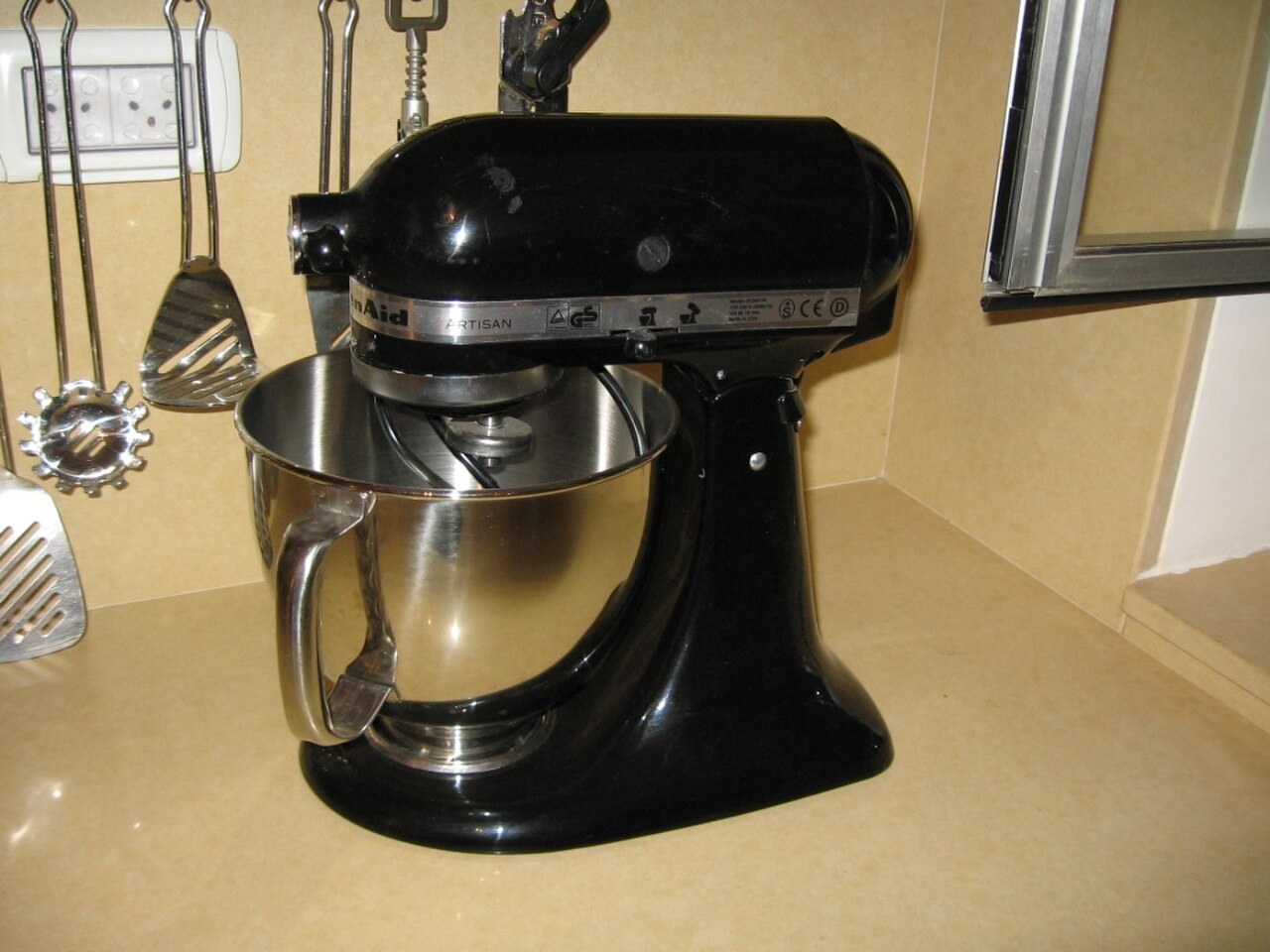
A used stand mixer may look attractive with several bowls and attachments. Check each part of the combination, however. A dough hook with a similar connection may not suit the bowl size or machine version. Model and part numbers provide a better basis than matching colours in a sales photograph. Establish compatibility before arranging any demonstration.
Assess bowl and tool together
Fit the intended bowl as directed and check its locking arrangement with the machine unplugged. Record cracks, distorted mountings and loose handles separately. Examine the whisk, flat beater and dough hook for bent areas, missing wires or damaged coating.
Tool-to-bowl clearance depends on the design. KitchenAid explains intended adjustments for particular models. A coin test borrowed from another machine or arbitrary screw adjustment is not universal. If a tool touches the bowl, first establish the correct parts and their proper seating.
Check head, lift and attachment mounting
Have any tilt-head lock or bowl-lift mechanism demonstrated according to the instructions. Observe whether it engages normally without forcing it under load. A shaky video cannot precisely measure play. Describe visible movement and seek model-specific advice if it appears abnormal.
Optional attachments need complete couplings, supports and covers. Ask whether a grinder or pasta roller is actually approved for that machine. Keep sharp attachment parts safely separate. Missing small fittings can make an otherwise extensive bundle unusable.
Set realistic care and trial expectations
A brief demonstration should resemble an allowed ordinary mixing task. Avoid heavy dough as an improvised stress test. Record the speed, fitted tool and unusual behaviour. Abnormal knocking or smells call for investigation rather than a larger load.
Check care instructions for each material. KitchenAid distinguishes coated, unfinished and stainless-steel mixing tools, for example; dishwasher suitability is not a property of the whole bundle. Include required replacement tools and professional service in the price before assuming that every problem is an easy adjustment.
Common questions
Does head movement always mean gearbox damage?
No. Seating, locking and design also matter. Record unusual movement and have it assessed for the specific model.
Can a damaged beater still be used?
Ask the manufacturer about its condition and suitable replacement. Bending or flaking parts are not simply a colour issue and should not be corrected by forceful bending.