When buying a used coffee grinder, match its intended application to your brewing method. A grinder designed for filter coffee may not offer the fineness or adjustment steps your espresso machine needs. Establish the intended use from the model documentation before assessing wear or accessories. A suitable machine with visible marks may be more useful than an unsuitable pristine one.
Inspect the hopper and outlet
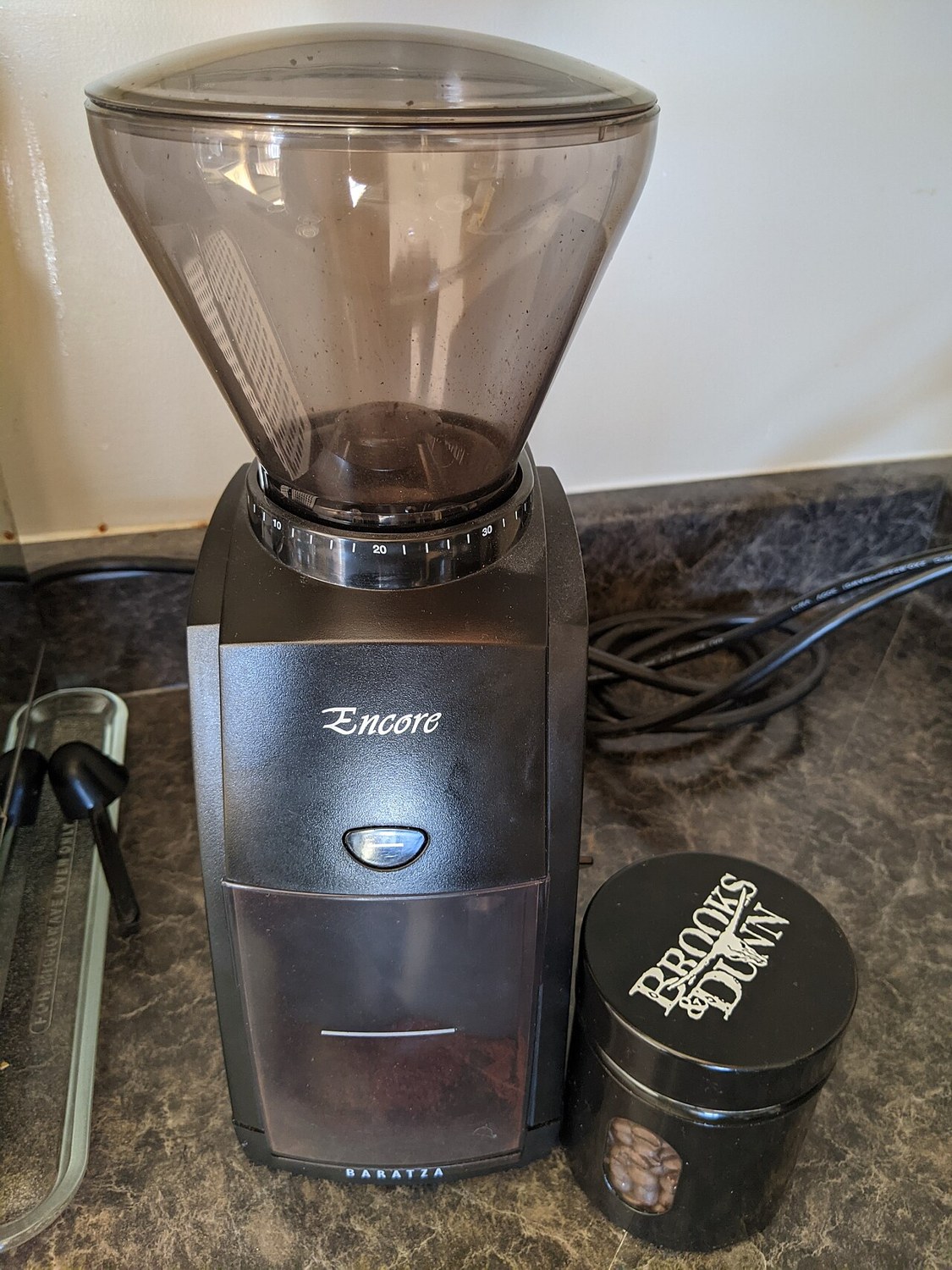
With the grinder switched off and unplugged, check the container, lid and intended catches. Cracks around a mounting point may matter more than surface scratches. Ask to see dosing inserts, the grounds container and any portafilter support. Missing parts create different daily problems from cosmetic marks.
Look into accessible coffee paths without putting fingers near grinding components. Old grounds indicate a cleaning requirement but do not establish the condition underneath. DeLonghi provides model-specific grinder-cleaning instructions; remove parts only as the owner instructions permit.
Adjust it using the correct procedure
Different designs impose different conditions for changing grind settings. Ask how the offered model is adjusted and find its manual. Do not force a stiff ring with tools. It may be dirty, obstructed or locked differently from the mechanism you expect.
Record whether the scale is complete and legible and whether a setting can be returned to consistently. Sound and one pile of grounds cannot measure wear accurately. The result also changes with beans, setting and preparation, so establish those conditions for a demonstration.
Observe a suitable grinding trial
Use only coffee beans intended for the grinder. Rice or other hard foreign material is not a universal cleaning test. Have a small normal quantity ground as directed, noting whether grounds emerge through the intended outlet and whether interruptions or abnormal noises occur. Do not demonstrate the machine with a damaged container.
Establish parts and service access for the exact model. Replaceable burrs help only if suitable components and competent fitting are available. Assess the overall work, including cleaning and accessories. A successful brief run cannot tell you how many kilograms of grinding life remain.
Common questions
Are grounds unexpected in a supposedly unused return?
They may come from use or testing. Ask about the history and distinguish a few traces from extensive old deposits.
Can I change the setting while stopped?
That depends on construction. Follow the model instructions rather than generalising a procedure from another grinder.